
How to Create a Content Strategy
Content has been an important aspect of marketing for decades, previously appearing in common forms such as flyers, magazine and newspaper ads, and television commercials.
Modern connectivity with the internet and social media has led to new content formats emerging and increased demand for content as part of a business’s overall marketing strategy.
Creating a content strategy for your business will streamline your marketing approach, establish consistency in your outreach, and help you better reach your ideal audience.
What is Content?
Content comes in numerous forms and encompasses a variety of pieces beyond social media posts.
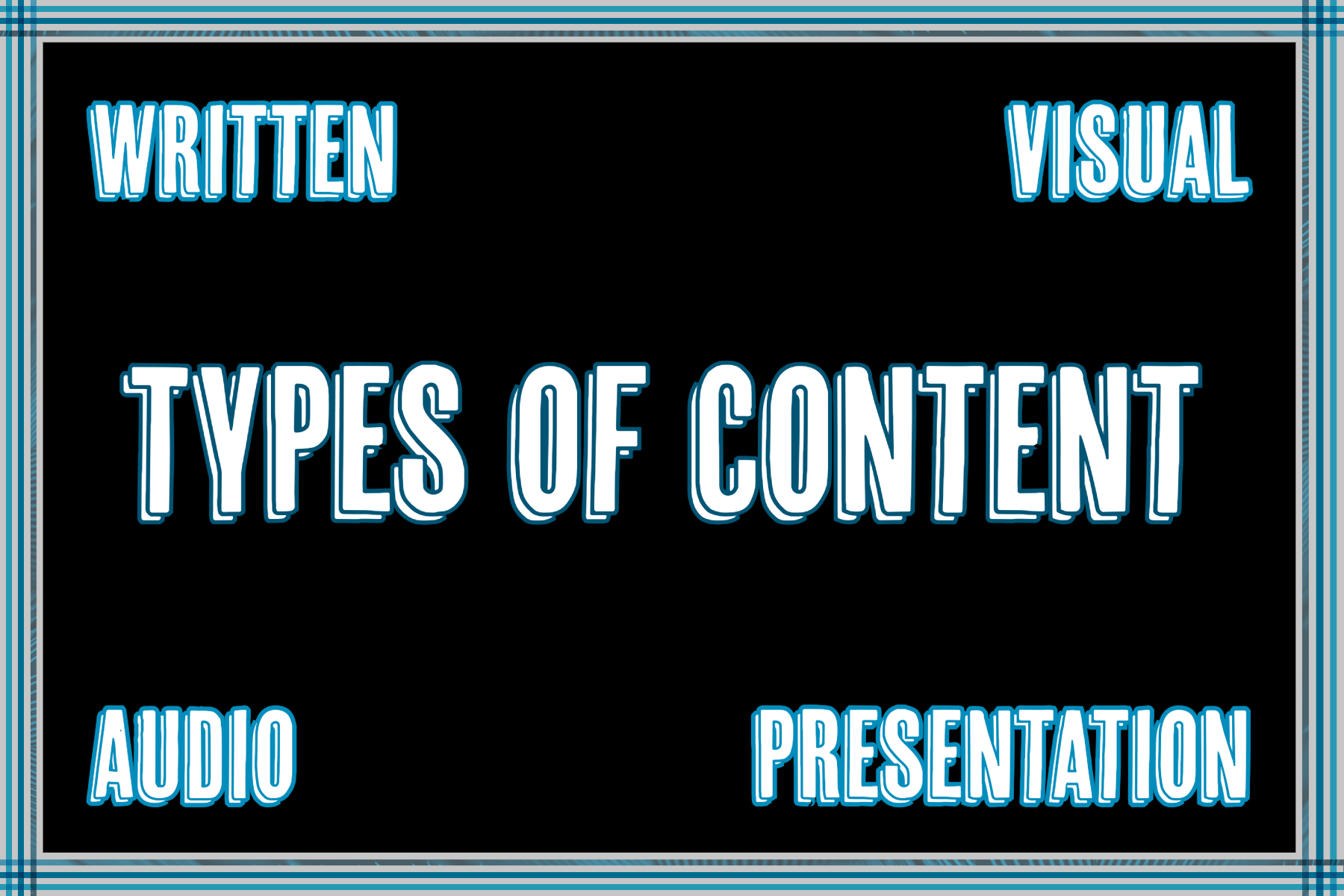
There are four basic categories of content types, with some content forms spanning multiple groupings.
Written Content
Written content includes pieces in either short form or long form that are published across both print and digital platforms.
This type of content works best to demonstrate expertise, share detailed information, and, when published on your website, improve your business’s search engine optimization (SEO).
Common examples of written content include
Articles
Blog posts
Newsletters
White papers
Magazines
Books and e-books
Emails
Case Studies
How-to guides
Checklists
Brochures
Visual Content
Visual content spans multiple media formats, from photos to videos to infographics. This type of content is the most prevalent on social media platforms.
Producing visual content is an effective way to entertain your audience, inform your target market, and promote your brand and business.
Examples of visual content are
Social media posts
Photographs
Videos
Memes
Gifs
Infographics
Flyers
Posters
Product packaging
Audio Content
While visual content frequently uses audio, audio content pertains to pieces of work focused on sound or the spoken word.
Audio content provides another avenue to demonstrate your expertise on a subject matter, entertain and inform your audience, and promote your business.
Types of audio content include
Podcasts
Audio books
Radio or streaming commercials
Songs or jingles
Presentation Content
Presentation content reaches a gathered, more focused group of people. This type of content educates and informs your audience through
Webinars
Workshops
Slide decks and PowerPoint presentations
Key Considerations for Quality Content Creation
Focus on Your Business Goals
The objective of a successful content strategy is to promote your business goals.
If you have not already identified SMART goals for your business, take some time to determine what you would like your business to accomplish through your marketing campaign.
SMART goals are
Specific
Measurable
Achievable
Relevant to your business
Time-bound with a deadline
An example of a business goal to focus on in a marketing campaign is increasing sales by 10% in the next quarter.
Know Your Audience
Before creating any type of content, it is crucial to know who your target audience is. Your target audience is the group of people who are most likely to buy your product or services.
Research your target market demographic to understand
Where do they spend their time?
How do they take in information?
Are they the type to scroll social media, read through a website, or pick up a physical brochure or magazine?
Do they typically read long articles on a subject matter?
Do they want to be educated, entertained, or both?
Once you have a firm understanding of your business’s audience, you will have a clearer sense of which types of content best suit your marketing strategy.
For instance, if your audience likes to multitask, then creating audio content, such as a podcast, provides a focused way to reach your target market.
When you have an audience that wants to be entertained as they scroll, then create short videos, images, memes, and GIFs for your social media pages. This is a great content avenue for musicians and artists, as their audience often wants to take in the creative’s craft either through short videos or photographs.
Target Your Content at User Intent
Now that you have a better understanding of your target audience, you want to tailor your content to match your audience’s user intent.
There are four types of user intent:
Informational - People who seek out information or answers to questions they have
Navigational - People who are looking for something specific, typically a website or social media page
Commercial - People researching a product or service before they commit to a purchase
Transactional - People who are ready to complete a purchase
Incorporate targeted content types into your marketing strategy to meet your audience’s intent.
For example, if you identify a large portion of your target audience as being informational, your business will benefit by providing value to your ideal customers through content in the form of blog posts, how-to guides, infographics, and informational videos.
When you identify a large group of users who are either commercial or transactional, then create content centered around your products and services and how they can make a purchase.
Identify Available Resources
Identifying your available resources will steer which types of content you produce and how often you create and publish.
Determine these primary content resources:
Time - How much time do you and your team have available to allocate towards content creation?
Budget - What is your business’s marketing budget for content?
Capabilities - What skill sets do you and your team have for creating content?
Tools - What types of gear, equipment, and software does your business have for content production?
Once you figure out your business’s accessible content resources, consider your target audience and user intent to choose content types and frequency that are within your reach.
If your business lacks the resources to implement a comprehensive content strategy in-house, consider partnering with third parties to meet your content needs. Check out local equipment rental opportunities or work with a content strategist to create and publish pieces for your business.
Creating a Content Strategy
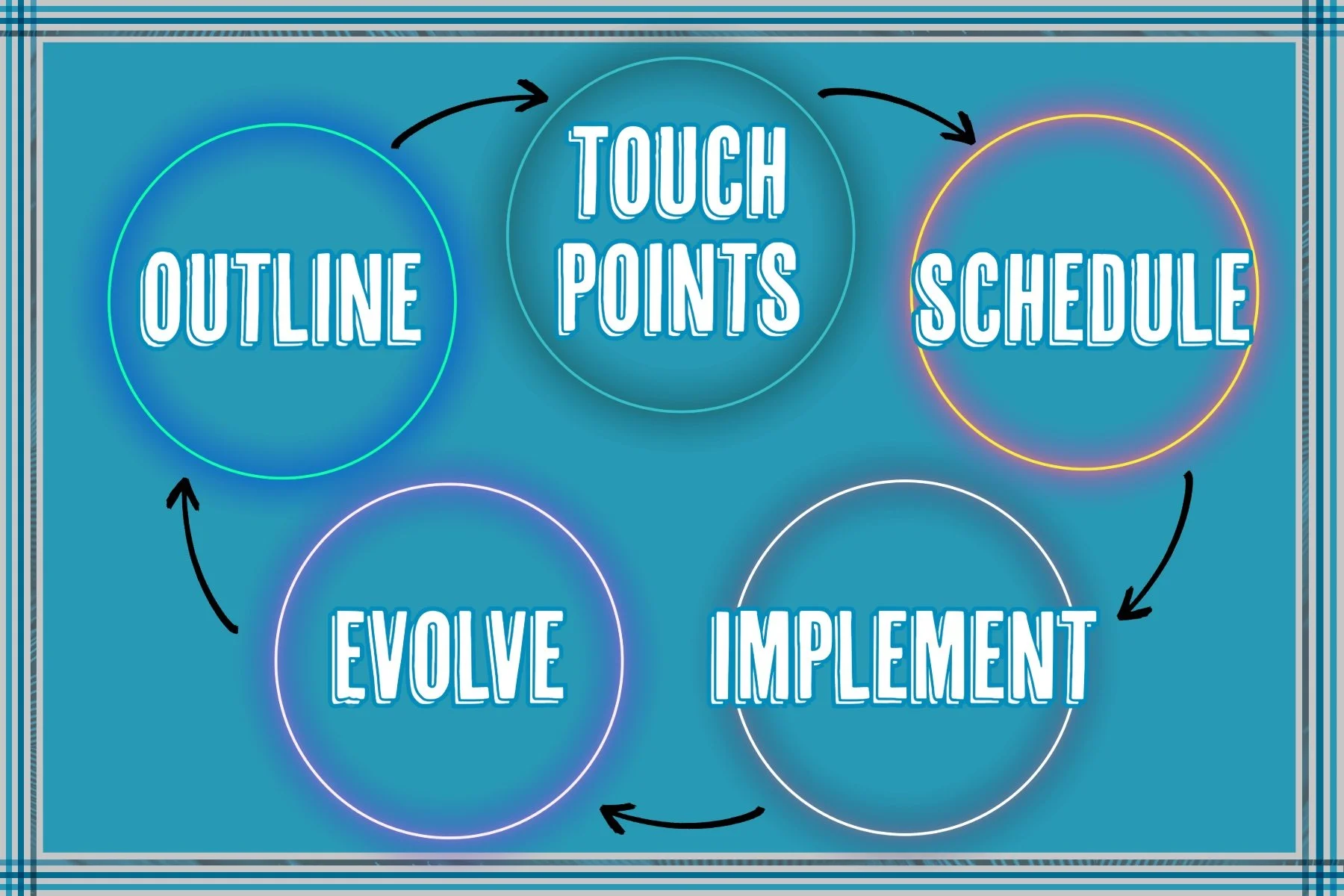
Now that you know what type of content you want to create, who it is for, where they will consume it, and what resources you have to produce it - it is time to put together a comprehensive content strategy.
1 - Outline Ideas for Content
Create a list of content ideas that includes the content type, theme, resources needed, and estimated time to complete.
Prioritize your list based on your business’s marketing goals and what you have identified about your target audience.
Focus on quality over quantity.
Publishing good content that adds value to your audience should always take precedence over filling a content schedule.
Your content-ideas list will continue to evolve as you learn which types of content work well and as you brainstorm more ideas and topics.
2 - Set Target Touchpoints
Next, review your available resources and list of ideas to set target touchpoints for your content.
A touchpoint is a point of contact between you and your audience.
If your business has ample resources and a long list of content ideas, then multiple touchpoints per week could make the most sense - so long as you do not spam your audience.
Other times, it makes the best sense to target one touchpoint per week, every other week, month, or quarter.
Every business is different, and the content type will also steer this decision. A business focused on producing white papers, presentations, or podcasts will need to spread its touchpoints to ensure high-quality content production.
3 - Create a Schedule
Create a realistic schedule that includes producing, publishing, and promoting your content.
Make sure you allocate enough time to complete each step of the process, then consider adding in some contingency time in case you hit an unexpected challenge.
Depending on the type of content you choose, completing and publishing one piece could take anywhere from an hour to a few days (or even longer with some forms of content).
Common tasks to consider with various content types include
Articles, blog posts, and white papers - Outline, research, draft, edit, revise, create graphics, publish, promote
Videos, webinars, and podcasts - Outline, research, draft script, consult stakeholder parties/people involved, create graphics, rehearse, record, edit, publish, promote
Infographics, flyers, and posters - Draft, edit, finalize, publish, promote
Some types of content production can be batched together.
For instance, if your group is doing video content, shoot multiple videos in the same session instead of gathering everyone together multiple times. Consider bringing a change of clothes or just an alternate top so that the outfits are not the same in each video.
If you need to produce product images, photograph multiple products in one session while you have your shadowbox, lighting, and/or backdrop set up.
Finding overlays and efficiencies in your workflow will shorten your overall content production time.
4 - Implement Your Strategy
Now that you have your content strategy created, it is time to implement it.
Stick to your strategy and schedule as best as possible and make notes along the way of what is going well, which items take longer than anticipated, and which pieces of content get good engagement.
Some pieces of content will get great engagement, and others may only get a handful of reactions. That is okay.
Focus on building consistency with your content publications and branding while keeping an eye on your business goals.
5 - Evolve and Improve
Once you have consistently published enough content to feel like you have the hang of your process, take some time to evaluate the observations you have been making throughout your strategy implementation.
Evolve your strategy and procedure in ways that you see will improve your content and bring you closer to achieving your business goals.

Don’t Get Lost in the Content
Remember: content is a portion of your marketing strategy, not your entire business plan. Don’t get lost in the modern world’s desire for content consumption and lose track of what your business is truly about.
At the end of the day, you are a business owner and not an influencer. Stay focused on your craft and growing your business, and let your content strategy complement your overall marketing plan.
Content Strategies with Blue Moss Creative
Blue Moss Creative creates personalized content strategies for creatives and business owners.
Contact us today to learn more about how we can help you reach your marketing goals.
——
This article is for informational purposes and does not constitute official advice.
Contact Blue Moss Creative today to schedule your free consultation.
Read more pieces from Blue Moss Creative: