
What Is SEO?
Many people have come across the acronym SEO but are often unsure exactly what it means or how it impacts their business’s online presence.
Here are the basics of SEO to help clarify how this valuable digital marketing strategy will optimize your online business presence for success.
Search Engine Optimization (SEO)
SEO stands for search engine optimization. It is a digital marketing strategy that helps web pages enhance their visibility with search engines and increase their rankings on search engine results pages, also known as SERPs.
Search engines, such as Google, Bing, and DuckDuckGo, strive to provide the most valuable results for their users. In order to do so, they seek out web pages that demonstrate experience, expertise, authority, and trustworthiness (EEAT) for a given topic.
Tailoring your business’s website with SEO and EEAT strategies in mind will help expand your online reach and accessibility to both current and prospective clients while enhancing the user experience (UX) of people visiting your web pages.
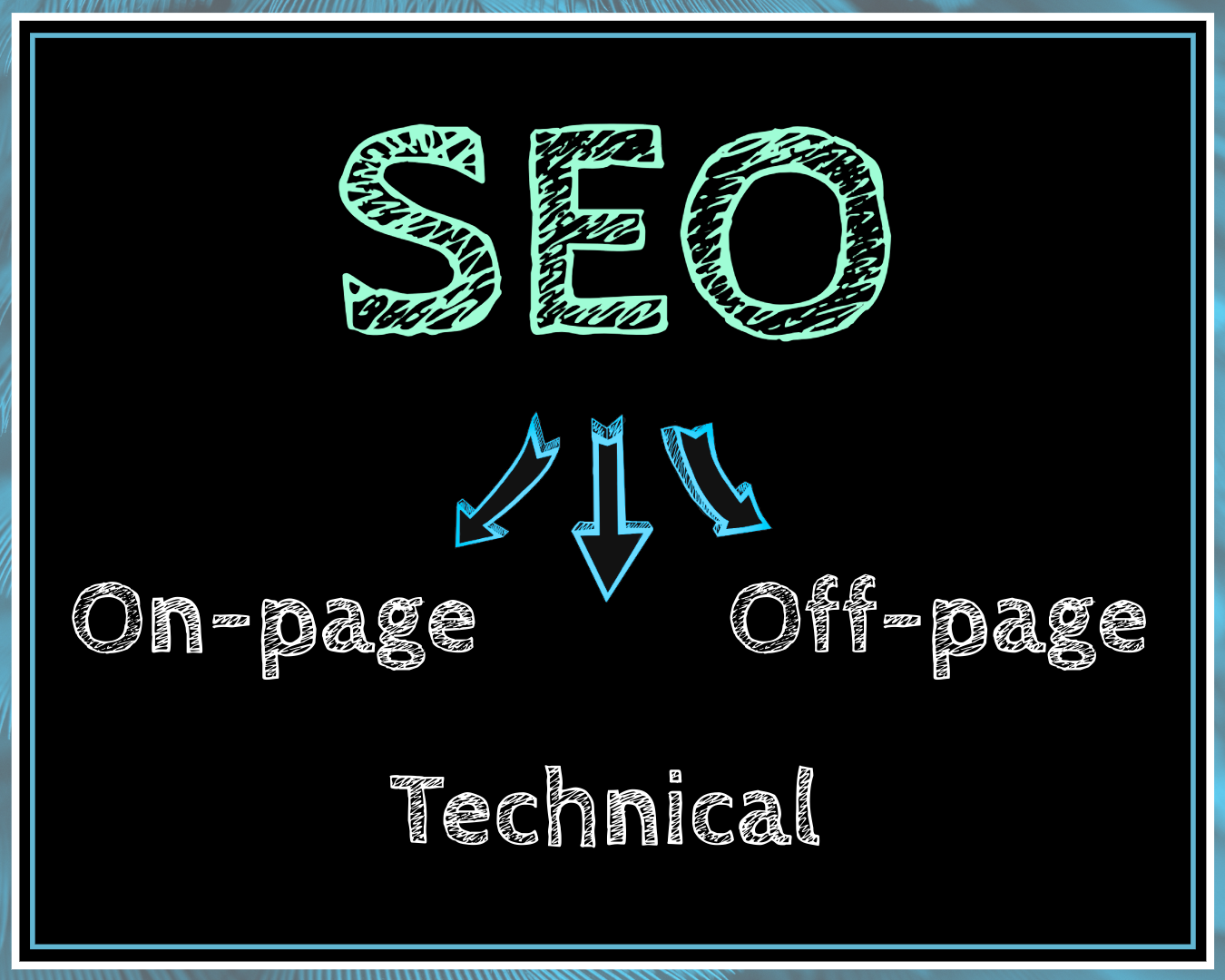
Three Areas of SEO
There are three main areas of SEO to take into account when updating your website: on-page SEO, off-page SEO, and technical SEO.
On-Page SEO
On-page SEO entails all the visuals you see when you look at a website. This includes the content structure, keywords used, headings, title tags, images, and more.
Optimizing your on-page SEO factors will improve the user experience and help search engines better understand what your website is about.
Examples of on-page SEO strategies include
Creating topical and useful content that demonstrates your authority and expertise on a subject matter
Using keywords in the title, headings, and the beginning of your content text
Diversifying the types of content media on your web page (i.e., text, videos, and images)
Off-Page SEO
Off-page SEO comprises all the factors outside of your website that impact its visibility and reach, including other websites linking to your page, online reviews, and brand mentions.
Search engines value trustworthiness in the websites that they display on their search engine results pages. For this reason, brand authority and customer satisfaction are of great importance for achieving strong off-page SEO.
The following list includes a few examples of off-page SEO strategies:
Having reputable websites link to your page
Encouraging satisfied customers to leave positive reviews on Google, Yelp, or other respectable review pages
Building a positive brand name and brand authority in your marketplace
Technical SEO
Technical SEO encompasses the elements of your website that happen behind the scenes. While this involves some coding in specific situations or with certain web hosts, it mainly comprises strategies that ensure your site runs smoothly for the end user.
As with all SEO, the primary goal of technical SEO is to provide a positive user experience.
Strategies to enhance technical SEO include
Confirming that none of your web pages result in an error page
Securing your website using hypertext transfer protocol secure (https)
Optimizing your pages for both desktop and mobile usage

SEO FAQs
Does Social Media Impact SEO?
All parts of your business’s online presence impact your website’s SEO, and this includes your social media pages.
Search engines index social media profiles, so it is important to use relevant keywords in your biography section and the text of your posts.
A significant SEO factor to consider for your social media page is how your profile will affect your brand’s authority and visibility. Demonstrating your expertise and building a loyal following associated with your business will help increase your trustworthiness with search engines.
Make sure to link to your website in your social media profile, and, when appropriate, encourage your followers to visit your page.
Is SEO a One Time Strategy?
Checking off SEO tactics when you launch your website is a great start, and one-time audits are highly beneficial.
However, SEO works best when your website is monitored and updated on a regular basis.
Strategic updates enhance the user experience by providing new, valuable information to readers, optimizing for relevant keywords based on research, and implementing necessary technical changes.
Working with an SEO professional helps you monitor key SEO metrics on your website and apply necessary updates while keeping your primary focus on your business.
Do I Need SEO for My Business If I Have a Website?
Launching a website is a critical and valuable first step in generating a strong online presence for your business.
By creating a website, you now have a URL to direct current and prospective clients when you are discussing your business.
But what about the people who are trying to find your website when you are not in direct contact or you do not have a personal connection?
Implementing an SEO strategy will make it easier for your customers and prospects to find your business online. A well-structured web presence demonstrates credibility to your client base, enriches their experience while working with your business, and drives stronger sales conversions.
A few simple steps will get you started with a basic SEO strategy for your business’s website.
SEO Strategies with Blue Moss Creative
Blue Moss Creative helps businesses enact SEO strategies so they can spend their time focused on what they love - their craft.
Contact us today for your free consultation.
——
This article is for informational purposes and does not constitute official advice.
Contact Blue Moss Creative today to schedule your free consultation.
Read more pieces from Blue Moss Creative: