
7 Next Steps for Growing a Creative Business
Once you have mastered the 5 Business Basics for Creatives, it is time to take your business to the next level.
This guide builds off the basics to help you enhance your business and expand your reach.

1 - Share Your Story
A key factor in growing any business is being able to clearly share your story in a professional, confident, and relatable manner.
Write Your Biography/EPK
Creating a biography and/or electronic press kit (EPK) provides contacts with a comprehensive overview of your business. People want to know who you are, how your business got started, what your credentials are, and what services you provide.
Biography
Every business should include an "About Us" or similar page on its website to house its biography.
A strong biography includes
When and why your business started
A summary of your experience and credentials on the subject matter
Your company values or work philosophy
The services you provide
Who your target market is
A personal fact or two about yourself
Electronic Press Kit (EPK)
In addition to a biography, musicians and other artists need an EPK to market themselves effectively by providing additional valuable resources that meet unofficial industry standards.
A well-structured EPK incorporates
The artist’s biography
Favorable professional images
Notable accomplishments
Favorable media coverage
Work samples
Contact information
Make Business Cards
It may feel old school, but having business cards on hand creates valuable opportunities to capitalize on in social situations.
Sure, you could have someone open their phone, and then wait as they save your contact information or navigate to your website. However, this often leads to a bit of an awkward interaction that results in your information getting lost in their phone.
When you have professional business cards on hand, you demonstrate to people that you are an established business and are not doing your craft as a hobby. They walk away having a physical reminder of who you are and what you do when you are no longer face to face with them.
Know Your Elevator Pitch
An elevator pitch is a quick summary of what you do. The concept centers around the idea of being able to clearly and concisely explain your work during a short elevator ride, so you want it to be no more than two to three sentences.
Your elevator pitch should be structured using layperson's terms (not industry jargon) and show your passion for your craft. Make it a compelling explanation that entices people to want to learn more. Run your pitch by someone who is not in your industry to make sure how you are explaining your work is clear.
Practice saying it out loud until you can deliver it naturally, with confidence, and with a smile.
2 - Enhance Your Online Presence
You already grabbed your URL, launched your website, and started a social media page. Now is the time to strengthen your online presence.
When expanding your digital footprint, keep your branding consistent across all platforms.
Build Your Website
Strive to achieve two main goals as you build out your website:
Provide an accurate, descriptive, and positive representation of your business
Add value to your visitors
A good initial website layout incorporates a few basic pages:
Home - This is the first impression of your site where most visitors will initially land. You want your home page to demonstrate what your business is and which market you serve, while enticing users to navigate to your other pages.
About - Your website's about page is where you tell your story. Since you have already written your biography, all you need to do now is add it to your website. Other terms for this page could be "Our Story," "Our Mission," "Meet the Team," or "Meet the Band."
Contact - Design your contact page with your users in mind. You want to make it as easy as possible for someone to contact you from your website. Using a contact form on this page does part of the users' work for them and leads to higher engagement. Providing optionality by including your business's email address in addition to a separate contact form on your site allows your users to choose their communication preference.
Portfolio - Depending on your business, a portfolio page will help demonstrate your experience. Use this page to highlight samples of your work that showcase your expertise and what you offer.
Remember, websites are works in progress. Your site will continue to evolve with time, as will your skill set. Don’t let the idea of perfection keep you from bringing aspects of your site live.
Use Basic SEO Strategies
Building your website provides the perfect opportunity to enact some simple SEO strategies.
Format your web pages with headings and subheadings to make your site more user-friendly, and chunk your content into short paragraphs for easier reading.
Incorporate relevant keywords into your titles, headings, and text to help search engines better understand the content on your website, and add in varying types of media in addition to text, including images, videos, and infographics.
Create Content
Content comes in various forms: social media images and videos, blogs, newsletters, podcasts, etc.
Use your business goals to steer which types of content you should prioritize.
Newsletters facilitate direct correspondence with your base, delivering your message straight to their inboxes; blog posts and articles on your website add value to your reader base while demonstrating your expertise; and social media reaches a broader community through typically short-form deliverables.
Whichever content types you choose, remember to focus on quality over quantity and keep your business goals in mind. Content creation is only a portion of your overall marketing plan. Its purpose is not to make you an influencer, but to help grow your business and expand your brand.
3 - Network
Building a strong network is a significant aspect of attaining success in business.
In the words of The Avett Brothers: “You gotta show up if you wanna be seen.”
Put yourself in situations where you will meet people who will add value to your business and vice versa. This includes going to places where
Your ideal clients congregate
People are at the level at which you aspire to be
You feel inspired and supported
Have your elevator pitch ready and go out to meet people with confidence. Don't be afraid to share that you are in the startup phase of your business.
Take a genuine interest in the people you engage with, and don't approach relationships from a "how can they help me" mentality. Get to know who they are, what their business is, and what has been working well for them. Ask how you can offer to help them or how you can work together. People want to work with people they like - not with people they feel are just there for their money.
Network both in person and online in the communities that feel like the best fit for you, your values, and your business goals.
4 - Set SMART Goals
Setting goals for your business will give you better direction and focus as you work through your day-to-day grind.
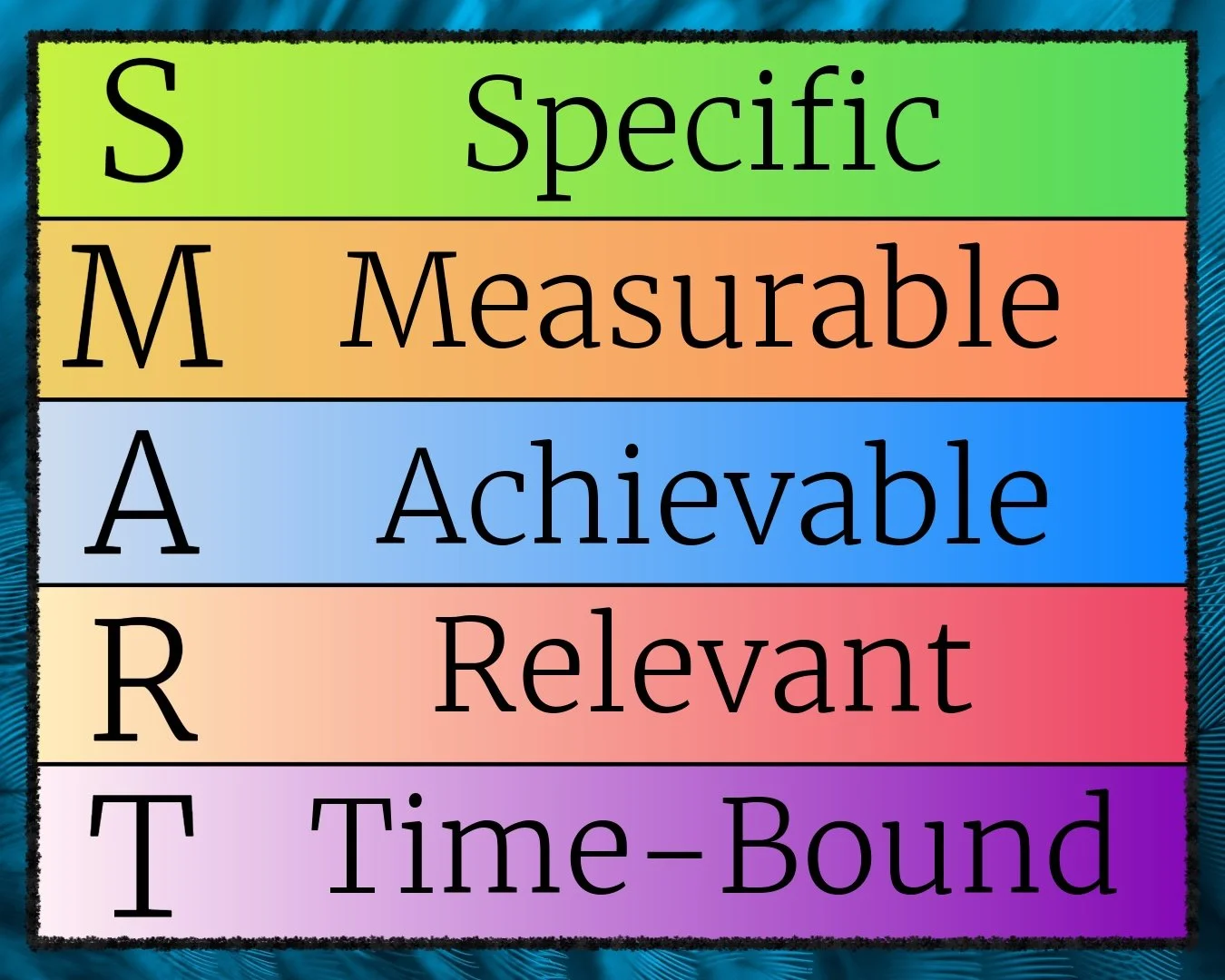
Use the SMART method when structuring your business goals:
S - Be specific with each goal
M - Make your goals measurable
A - Choose achievable goals
R - Goals should be relevant to your business
T - Keep your goals time-bound with a deadline
Spend some time identifying what you want to accomplish and how long you estimate it will take to achieve these goals realistically. Map out short-term (6 months to a year), mid-term (one to three years), and long-term (three years plus) goals, and determine what your definition of success is for your business.
Outline your goals and keep them regularly visible, ideally in a place you see most days.
Review your goals weekly to keep them top of mind, and re-evaluate them every three to six months. Is there anything that needs to shift? Are you reaching any goals sooner than you thought, or do some deadlines need to be pushed back?
Make strategic alterations if needed, but don't scrap your goals altogether in your first re-evaluation. You set them up for a reason, and sometimes things take longer than anticipated or don't go as planned initially.
If, after numerous check-ins, it makes the best business sense to let go of specific goals because they no longer align with your business’s trajectory, then that is the time to do so.

5 - Track Performance Metrics
Once your goals are established, it's time to start tracking your progress towards them by evaluating performance metrics (also known as key performance indicators, or KPIs).
Performance metrics need to be quantifiable and specific. Use data-driven resources and not opinion-based sentiments.
Examples of performance metrics to track include
Sales Conversion Rate
How many touch points with contacts lead to sales - i.e., it takes five emails on average to a venue's talent agent before getting booked, or visitors come into the store/gallery twice on average before making a significant purchase.
Revenue
Look at revenue by product line or venue/event type.
Monitor which products or events bring in the most income.
Costs
What are your operating costs to run your business?
How many of your costs recur monthly, and which are one-time expenses?
Referrals
How much of your business is from word of mouth?
Client/Fan Engagement
What are your ticket sales for each event?
How many people view your website or read your newsletter?
How engaged is your following on social media?
Which client/fan engagement touchpoints are converting into sales?
After you track your metrics for a long enough period, you will have a strong compilation of data that you can analyze to implement strategic changes to your business.
Take some time to evaluate your progress towards your goals. What is going well? What needs improvement?
6 - Get Established
Putting proper business documents in place is an essential step to get established.
Write a business plan to lay out how your business will operate, including
Your mission and vision statements
Products and/or services provided
Pricing structure
A market analysis of your industry
Growth strategy and metrics
Financial and sustainability plans
Consult with tax and legal experts to determine the proper structure for your business (Sole Proprietor, LLC, S-Corp, etc) and to decide whether you should establish a DBA (Doing Business As).
Often, it makes the best business sense to set apart your business entity from your personal assets to protect yourself from liability.
Establishing an Employer Identification Number (EIN) with the IRS will separate your business finances and allow you to open a business bank account and credit card.

7 - Prospect
Effectively prospecting your business is critical to its success. Prospecting is the process of identifying leads for potential new customers and then contacting your leads through either warm or cold outreach.
The first step in prospecting is performing research. You've already identified who your ideal client is; now it's time to find them.
Compile lists of individuals and businesses who are a good fit for your products or services. Make sure to include their contact information and any other key facts (for instance, if you have a contact who knows them or already does business with them).
Next, it is time for outreach. There are two types of prospecting outreach: warm and cold.
Warm Prospecting
Warm outreach occurs when you contact someone with whom you already have a connection, either directly or through a mutual contact.
This type of outreach frequently starts with a certain level of trust already established, thanks to the personal familiarity of the interaction.
Warm prospecting includes
Reaching out to former business associates as potential clients
Attaining referrals through your existing contacts
Collaborating with your networking community
Cold Prospecting
Cold outreach forces you to thicken your skin and step out of your comfort zone.
This type of outreach entails reaching out to people with whom you have no connection. While this form of prospecting feels a bit brutal at times, it pays off when you stick with it and remember it is a numbers game. The more people you contact, the more meetings you will schedule and the more comfortable you will be in your approach.
Examples of cold prospecting are
Cold calling
Sending cold emails or direct messages
Mailing campaigns
Cold knocking (showing up to places of business to introduce yourself)
Whether it is warm or cold prospecting, the goal with your initial outreach is to build a positive relationship before closing the sale. For many industries, your main goal in your outreach is to set up an introductory meeting.
Business Strategies with Blue Moss Creative
The Blue Moss Creative works closely with entrepreneurs to help them establish the best practices for managing and marketing their businesses.
Contact us today to learn more.
——
This article is for informational purposes and does not constitute official advice.
Contact Blue Moss Creative today to schedule your free consultation.
Read more pieces from Blue Moss Creative: